The market gets tougher, the customer base grows: inside the teamwork of CPC Inox and A.D. Tubi Inossidabili
- 23 September 2026
In 2026 the stainless steel market is going through a period of widespread difficulty. According to European Commission estimates, global production overcapacity exceeds 620 million tonnes and could reach 721 million by 2027, more than five times the EU’s annual consumption. Since 2025 the United States has raised tariffs on steel and aluminium to 50%, diverting import flows towards Europe. In some categories, such as stainless steel bars and rods, these flows grew by more than 1,000% in 2025 compared with the previous year, with prices plunging by 88%[1]. On top of this, weak industrial demand has led some major European producers to cut production capacity, in a picture made even more unstable by geopolitical tensions affecting raw material supply routes.
In response to this scenario, CBAM entered its definitive phase on 1 January, introducing an additional cost on imports from non-EU countries linked to carbon emissions. Since 1 July, under the new European regulation 2026/1384, the duty-free import quota has been reduced to 18.3 million tonnes per year[2], 47% less than in 2024, while the duty on volumes above the quota has risen to 50%. New traceability requirements on the origin of materials have also been introduced.
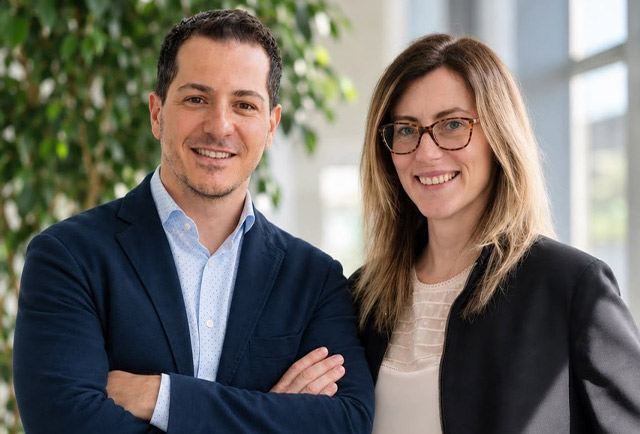
Against such a complex backdrop, CPC Inox and A.D. Tubi Inossidabili have closed the past few months with a figure worth telling: since the start of the year, the customer base has grown by 16% at A.D. Tubi Inossidabili and by 11% at CPC Inox. We discussed it with Alberto Schiavo, Chief Commercial Officer of Cardinali Holding, and Federica Orsenigo, Marketing and Development Manager, with input from Riccardo Dalmiglio, Data Analyst, whose data supported many of the decisions described in this interview.
With tariffs, CBAM and trade tensions making the market increasingly complicated, how do you interpret these growth figures?
Alberto Schiavo: We don’t see them as a finish line, but as confirmation that our approach works. When the context gets harder, customers look for reliable partners rather than generic suppliers. The regulations we’re talking about change the rules of the game for everyone, including us. But a company organised to respond quickly and accurately to a technical specification has a real advantage in a market where uncertainty discourages impulse buying.
What does this growth mean in practice for a customer?
Federica Orsenigo: It means faster response times, material availability even when the market is tight and a contact person who knows the customer’s specific industry. We serve more than 23 different sectors, from nuclear to water treatment, from data centres to solar energy, and each one has different technical requirements. It’s not about selling more, but about continuing to offer the right solution even as the variables to manage, such as customs costs or material availability, have increased.
What role have data and analysis played in this journey?
Alberto Schiavo: A central one. Riccardo’s work on sales data allowed us to understand in advance where the market was heading, which sectors were looking for new suppliers because of sourcing difficulties and where our technical offering could respond best. The commercial decisions we make today are based on verified numbers, not gut feelings.
CPC Inox and A.D. Tubi Inossidabili operate in the same stainless steel market and share some products: what advantage does a customer gain from having two complementary companies in the same group?
Federica Orsenigo: It’s a tangible advantage, not just an organisational one. CPC Inox works on semi-finished products, distribution and custom processing, guided by speed, punctuality, quality and sustainability. In some cases it also supplies raw material to A.D. Tubi Inossidabili, which turns it into welded tube with a more technical focus: its guiding principles remain Quality, Expertise, Flexibility, Sustainability. For the end customer, this means a shorter, more controlled supply chain, with two group companies working in sequence on the same raw material instead of dealing with two separate suppliers.
Group marketing is a relatively new function in the company: what difference does it make for the business and for those who contact you?
Federica Orsenigo: It makes a difference on two fronts. The first is communication: a company looking for a supplier should be able to find clear information on what we do, which sectors we serve and what our lead times are, without having to pick up the phone to find out. The second is less visible but just as concrete: our work on the CRM, which lets us keep track of each customer’s requests, specific needs and order history, so we can offer a more precise service instead of starting from scratch every time. For the sales team, it means going into a negotiation already well informed. For the customer, it means a more consistent, less fragmented service.
What would you say to a company that is currently evaluating a new supplier in such an unstable market?
Alberto Schiavo: That regulatory stability won’t return any time soon, so it makes sense to choose a supplier that has already factored change in. In a market that is slowing down and fragmenting, we choose to accelerate: more data to anticipate where demand is shifting, greater integration between group companies along the same supply chain, and more technical and commercial expertise for those looking for a concrete solution, not a promise.
[1] Figures on global overcapacity (over 620 million tonnes, estimated to reach 721 million by 2027) and on the growth of EU imports of stainless steel bars and rods (+1,000% in 2025 compared with 2024, with prices down 88%) are taken from a European Commission report, as cited by Startmag and ItaliaOggi.
[2] The figures on the reduction of the import quota to 18.3 million tonnes (-47% compared with 2024) and on the increase of the duty to 50% come from Regulation (EU) 2026/1384, published in the Official Journal of the European Union on 24 June 2026 and applicable from 1 July 2026, replacing the safeguard regime (Implementing Regulation (EU) 2019/159) that expired on 30 June 2026.